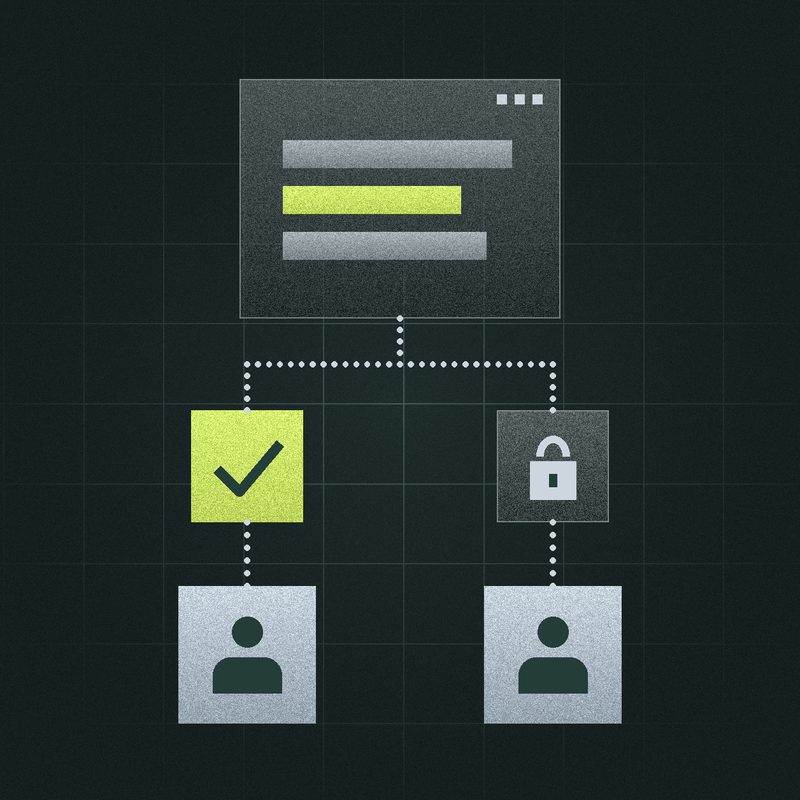
Our agentic AI platform. Hobie builds governed agents for your data and for your software delivery, serves them in the tools your people already use, and learns from every answer and every merged pull request.
Requests flow down through the layers. Answers and code flow back up, and Beacon learns from each one.
Shoreline
Where your people work
Agents are served over MCP, under your sign-in and access rules, in the tools your people already use: chat clients such as Claude Desktop, AI coding tools such as Claude Code, GitHub Copilot, Cursor, OpenAI Codex and Gemini, and browser apps for review and approval steps.
Shaper
Builds the agents
The Hobie Agent Framework, run by a Hang Ten forward-deployed engineer on your infrastructure. For your data, it reads your schemas, APIs and documents, models the business, then generates and tests the agents. For software delivery, it builds 23 agents from the Hobie seed and your answers to 66 intake questions. Either way, the result is one container of agents made for you.
Lens
The knowledge graph
What the agents know. For your data, a semantic layer of metrics, joins and vocabulary, where edits go live as overlays. For software delivery, the SDLC model and its rules, industry standards such as OWASP, NIST SSDF, SLSA and SBOM, your engineering graph of code, ADRs, tickets and PRs, and your domain knowledge.
Reef
Your systems, in place
Agents work in your systems, not copies of them: read-only scans and queries against your databases, business applications and documents, and your own source control, CI/CD, boards and security scanning, each behind a gate. Nothing is migrated.
Beacon
Learning and benchmarking
Spans every layer. Every answer and every merged pull request feeds a loop that tests the agents against your own work and proposes fixes, which ship only after a person approves them. The agents are benchmarked continuously, with fail-closed gates and every call logged.
The same framework builds governed agents for your data and a full software delivery team. Both are served the same way, under the same controls, and improved by the same loop.
For your data
Governed agents, built from your systems
Hobie turns your databases, APIs and documents into tested agents, each served as typed MCP tools under your identity and access rules. SQL comes from a compiler that writes select-only queries or declines, and any write through an API needs confirmation.
Generated for your stack and served to your engineers' AI coding tools, where they call each agent by @persona. Sixteen agents work in your repo, and seven work through your DevOps platforms. Independent reviewer agents check every change, and named people sign off.
In a 90-day engagement with a global wind-energy leader, Hang Ten delivered five applications 84% faster and at about a third lower cost than conventional development. Agents wrote all the code and documentation, independent reviewer agents checked every change, and named people signed off the plan, the review and the security.
84%
Faster per application: about 14 days, against about 90
~34%
Lower cost per application
93.1
Out of 100 on a delivery quality index, against about 75
>90%
Unit and functional test coverage, up from 65% and 50%
0
Critical or high security findings open at handover
Measured with the customer against its conventional development. Five applications were rebuilt from a legacy monolith, against three planned, with 2,849 automated tests run on every change. Cost covers delivery effort, the customer's review and acceptance time, and AI compute, and leaves out licences and infrastructure.
The agent team
Dev team · 16 agents
Work in your repo through your AI coding tools.
Discovery
Product owner
Business analyst
Delivery
Project manager
Orchestrator
Design
UX
Designer
Build
Architect
Backend
Frontend
Database
DevOps
Quality
Tester
Code reviewer
Security
Enablement
Docs
AI-ops
DevOps and process · 7 agents
Work through each platform's MCP server and API field map.
DORA analyst
Build analyst
Release manager
Issue triager
Error triager
Code review
Security
At the default autonomy level the agents draft and recommend, and your engineers carry out every write. You set the level in the intake, from reads only to acting on pre-approved patterns.
Beyond a single coding agent
A coding agent on its ownHobie SDLC agents, delivered with Hang Ten
Who checks the workThe same agent, or the developer who prompted itIndependent reviewer agents. The agent that writes the code can't approve or merge it
ControlsWhatever the developer asks it to runTests, security scans and reviews on every change, with nothing sampled
Before any codeA promptA backlog, design and threat model, each approved by a named person
What you getA pull requestCode, tests traced to requirements, release documentation and acceptance evidence
Where people spend timeReading large AI-written diffsSteering the agents, and verifying small changes after automatic checks
How you know it worksA demoA delivery quality index, and continuous benchmarks against a single coding agent
The gate in each area
The delivery agents work inside your engineering tools, and the Hobie seed sets a gate in each area.
AreaPlatformsGate in the Hobie seed
Source controlGitHub, GitLab, Azure DevOpsA merge needs an approval and green CI
CI/CDGitHub Actions, GitLab CI, Azure PipelinesNo production deploy on red CI
Boards and issuesGitHub Projects, Jira, Azure Boards, OpenProjectLabel changes and board moves need a person's approval
Security scanningGitHub code scanning, Dependabot, secret scanningNo deploy with an open critical finding
Releases and deploysTags, releases and deploymentsA person approves every release write
AI observabilityOpenTelemetry, Datadog, Grafana, SentryNo AI deploy without an eval gate
Your platforms' own settings, such as branch protection, enforce reviews and status checks. Product names are trademarks of their owners.
Built to be governed
Agents write the work. Named people stay accountable for it.
Verification is independent of generation
The agent that writes code has no route to approve or merge it. Reviewer agents run in the pipeline, and no one can approve or merge their own work.
Every control runs on every change
Tests, scans and reviews that used to be rationed by reviewer time run on every change. Nothing is sampled.
Sign-offs stay with people
A person accepts the backlog, approves the design and clears the threat model. Sign-offs at plan, review and security stay with named people.
Autonomy you choose
L0 reads only, L1 drafts and recommends (the default), L2 writes after a person approves, and L3 acts on pre-approved patterns and escalates exceptions.
Quality measured the same way for all
A delivery quality index scores build health, test quality, traceability, security and process hygiene, the same way for code written by agents or by people.
Your edits survive every rebuild
Your own section in each agent is kept byte for byte, and every generated agent carries a stamp with its version, generator, model and build time.
Beacon
Learning and benchmarking
Hobie Continuous Learning tests the agents against real use and improves them. Every answer and every merged pull request feeds the loop, a person approves each change before it ships, and benchmarks show whether it worked.
Data agents learn from every answer
Step 1
Log every answer
Question, SQL or SPARQL, cost, latency and gaps, plus an audit log
Step 2
Capture feedback
Corrections, confirmed answers and often-asked untested questions
A person
Human review
A person promotes test cases and approves drafted fixes
Step 4
Benchmark
Row check, LLM judge, and cost and latency budgets against a baseline
Step 5
Diagnose and fix
Finds the failing layer, applies safe fixes and rolls back any regression
Step 6
Go live
Overlays apply on the next query, and fixes merge into your Git
Delivery agents learn from every merged pull request
Step 1
Harvest findings
AI and human reviews, CI failures and fix-up commits from merged PRs
Step 2
Find lessons
Problems that recur across PRs, checked against the agents' rules
Step 3
Propose fixes
Agent rules, knowledge entries, lint config or draft ADRs, each as a PR
Step 4
Verify
Before-and-after runs on the evidence, with unchecked edits flagged
A person
A person merges
Nothing reaches an agent until a person merges the PR
Step 6
Track each rule
Rules that stop helping are proposed for rewording or retirement
Benchmarked continuously
Measured against the alternative
Hang Ten benchmarks the delivery agents continuously against a single coding agent on hidden tests, for accuracy, time and tokens. Data agents are tested against eval sets built from your own ground truth.
Gates and audit
Built into every step
Access is fail-closed and role-aware, through your identity provider. Every call is logged, and every answer and every change traces to the model, data and person behind it.
Why Hobie
What sets Hobie apart
Agents built for your systems and your stack, run under your controls, and improved on evidence from your own work.
Your data never moves
Agents query and work in your systems in place, with nothing copied or migrated.
Built for your stack
Agents are generated from your schemas, APIs, documents and intake answers, and tested before they ship.
Deterministic by design
Data agents emit structured intent that compiles to read-only queries, so answers stay safe and repeatable.
Learns from real use
Every answer and every merged pull request feeds a loop that tests and improves the agents, with a person approving each change.
Governed by default
Fail-closed, role-aware access with per-caller credentials, controls aligned to HIPAA, SOX and NIST, and every call logged.
You own what it builds
Agent packages, semantic models, eval sets and answer logs stay in your own Git and stores, with every approval in your tools.
In your program
Start with 90 days.
A Hang Ten team proves the method on a first set of your applications, with your experts steering and signing off. Results are measured against how you deliver today before you decide to scale. Our forward-deployed engineers generate the agents, set up the container that serves them, and teach your team to run and extend them.